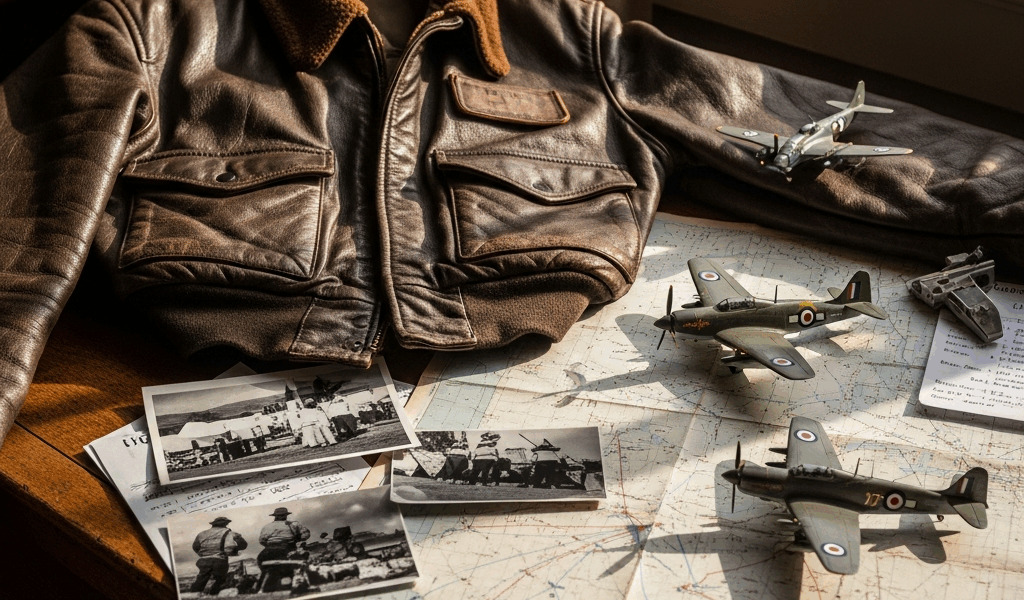
Zero vs Wildcat — Who Really Owned the Pacific Skies
The Zero vs Wildcat debate has gotten complicated with all the spec-sheet noise flying around. Turn radius. Climb rate. Maximum speed at altitude. Numbers without blood in them. I’ve spent years buried in pilot memoirs, declassified combat reports, unit histories — the kind of primary sources that don’t make it into YouTube thumbnails. Today, I will share it all with you. What strikes me every time is how badly the raw data misses the actual story. So, without further ado, let’s dive in.
This article includes affiliate links. We may earn a commission at no extra cost to you.
What Made the Zero So Terrifying in 1941
When American and British pilots first ran into the Mitsubishi A6M Zero in significant numbers, the reaction wasn’t professional respect. It was closer to disbelief. Claire Chennault had sent warnings back to Washington about Japanese fighter performance over China. Those warnings were largely ignored. That decision cost lives.
But what is the Zero, really? In essence, it’s a lightweight carrier fighter optimized almost fanatically for range and maneuverability. But it’s much more than that — it was a doctrine made physical, a philosophy about how air combat should work expressed in aluminum and rivets.
The Zero’s turn radius at low-to-medium speeds was genuinely extraordinary. It out-turned virtually every Allied fighter it met in 1941 and early 1942. Its range — roughly 1,600 miles with a drop tank — let it appear over targets where Allied planners simply didn’t expect carrier-based fighters to reach. At Pearl Harbor, pilots scrambling in P-40s and P-36s found themselves chasing something that could climb faster, turn tighter, and disengage whenever it felt like it.
Lieutenant Commander John Thach, who would later engineer the tactic that turned the tide, described early encounters as fighting something that seemed to violate the rules. The Zero weighed roughly 5,300 pounds fully loaded. A contemporary F4F-4 Wildcat came in around 7,950 pounds. You feel that difference in a dogfight before you can think it through analytically.
What made the Zero dominant in that specific historical moment wasn’t just the airframe — it was the pilots flying it. The men over Pearl Harbor and in the early Solomons campaign had hundreds of combat hours from the China campaigns. They were flying an aircraft designed around their experience, around a doctrine that treated individual maneuvering skill as practically sacred. That combination — superior plane, superior pilot experience — made the Zero look nearly invincible through most of 1942. That’s what makes the Zero endearing to us history enthusiasts, honestly. It was genuinely terrifying on its own terms.
The Wildcat’s Strengths Most People Overlook
Probably should have opened with this section, honestly, because the Wildcat’s advantages are the part of this story that gets buried fastest.
The F4F Wildcat was slower. It turned worse. It climbed slower. Every comparative table shows this. What those tables don’t show is that the Wildcat could absorb punishment that would have destroyed a Zero outright. Grumman built the F4F with 155 pounds of cockpit armor and self-sealing fuel tanks — features the Zero lacked entirely. Japanese designers made a deliberate trade: strip weight, gain performance, sacrifice survivability. In a war fought by experienced veterans who could avoid being hit, that trade made sense. In a war of attrition against an industrial giant replacing both aircraft and pilots faster than Japan could manage, it became catastrophic.
The Wildcat also had a meaningful edge at high speed. Above roughly 300 mph, the Zero’s controls stiffened dramatically — ailerons especially. Rolling at high speed in a Zero was genuinely difficult. The Wildcat rolled well at speed. That detail becomes critically important once you understand the Thach Weave.
A few specific numbers worth knowing: the F4F-4’s six .50-caliber M2 Browning machine guns fired at roughly 850 rounds per minute each. Hit a Zero’s unprotected fuel tank with that and the result wasn’t a damaged aircraft — it was a fireball. The Zero’s 7.7mm guns could put holes in a Wildcat all day. The 20mm Type 99 cannons were lethal, but early variants carried only 60 rounds per gun. Wildcat pilots who survived their first engagements learned fast. Take hits. Stay fast. Don’t let a Zero get behind you while you’re slow. Don’t make my mistake of thinking the kill stats tell the whole story before understanding that lesson first.
How the Thach Weave Changed the Math
Frustrated by the impossible kill ratios coming out of early Pacific engagements, John Thach developed his weave tactic using matchsticks on a tablecloth, working alone in his quarters at NAS North Island sometime in early 1942. The idea was deceptively simple. Two fighters fly parallel. One gets attacked from behind. That pilot breaks hard toward his wingman — crossing paths. The wingman, now with a turning shot at the pursuing Zero, fires. The Zero, committed to its attack run, flies straight into the deflection shot.
Why did this work specifically against the Zero? The tactic exploited the exact features that made the Zero dangerous. A Zero pilot following a diving, turning Wildcat was doing exactly what his aircraft and his training told him to do — use superior maneuverability to stay on the target. The Thach Weave turned that instinct into a trap. The Zero had to either break off or accept a gun solution from the second Wildcat. Neither option was good.
The tactic required disciplined two-plane coordination and pilots who trusted each other completely. It worked because it substituted doctrine for individual skill — and in 1942 and 1943, American pilots were being produced faster than they could accumulate the kind of combat experience that Imperial Japanese Naval Air Service veterans brought to the fight. Thach Weave made a less experienced pilot dangerous. That’s what doctrine is for.
What the Thach Weave reveals about the Zero is honestly more important than what it reveals about the Wildcat. A fighter optimized purely for maneuvering performance is vulnerable to any tactic that removes one-on-one maneuvering from the equation. The Zero’s designers didn’t anticipate coordinated two-ship tactics as a primary threat. They should have.
Guadalcanal and Midway — Where the Verdict Was Written
Stunned by early losses, American naval aviation went looking for answers in the data coming out of two campaigns that defined the Pacific air war.
At Midway in June 1942, VF-3 under Thach flew F4F-3s against Zeros during the torpedo bomber attacks — using the weave under actual combat conditions for the first time. Thach’s own account describes shooting down three Zeros with it. That was a real-world proof of concept under the worst possible circumstances.
Guadalcanal told the longer story. Between August 1942 and February 1943, Marine and Navy Wildcat pilots flew from Henderson Field against continuous Japanese air attacks. The kill ratio over the full campaign, depending on whose records you trust, favored American pilots somewhere between 5:1 and 7:1. That number requires context — American pilot training was improving rapidly by late 1942, Japanese pilot quality was declining as veterans died and replacements got rushed forward, and the Wildcats over Henderson had the advantage of fighting defensively over their own airfield. Loss ratios in a campaign like that aren’t a clean measure of aircraft performance. They never are.
What Guadalcanal does show cleanly is survival rate. American pilots who went into the water or crash-landed near Henderson Field were often recovered. Japanese pilots who went down over Guadalcanal were not. The Zero’s lack of pilot protection meant a damaged Zero frequently became a dead pilot. A damaged Wildcat frequently became a repaired aircraft with an alive pilot who would fly again the following week. Across six months of daily combat, that difference compounded into a catastrophic Japanese pilot shortage that no amount of performance advantage could offset.
So Which Fighter Was Actually Better
For Japan in 1941, the Zero was the right aircraft. It fit their doctrine, their pilot pool, and their strategic situation — strike fast, strike far, win before attrition matters. In that context, it was arguably the finest carrier fighter in the world at the time it was introduced. This new philosophy of lightweight, long-range fighter design took off across several years of development and eventually evolved into the A6M that aviation enthusiasts know and study today.
By mid-1942, the Wildcat was the better combat aircraft for the war actually being fought. Not because it outperformed the Zero on any spec sheet — it didn’t. The F4F-4 kept pilots alive, survived battle damage, worked inside coordinated tactics, and came off the Grumman factory floor in Bethpage, New York at a rate that made individual aircraft losses survivable. I’m apparently someone who spent years convinced the performance specs were the whole story, and the pilot survival data works for changing that view while raw numbers never quite do. Japan couldn’t replace experienced pilots. Grumman could replace Wildcats.
While you won’t need a PhD in aeronautical engineering to understand this debate, you will need a handful of primary sources — the memoirs, the combat reports, the unit histories. First, you should read Thach’s own accounts — at least if you want to understand why the weave worked as well as it did. The Zero might be the more romantic choice, as the Pacific air war requires understanding both sides of the kill ratio. That is because the side that kept its pilots alive longer won the argument that mattered.
The Zero was a magnificent weapon for a short war of maneuver. The Wildcat was built for the war that actually happened. That’s the difference.


Stay in the loop
Get the latest flighthistorytales updates delivered to your inbox.