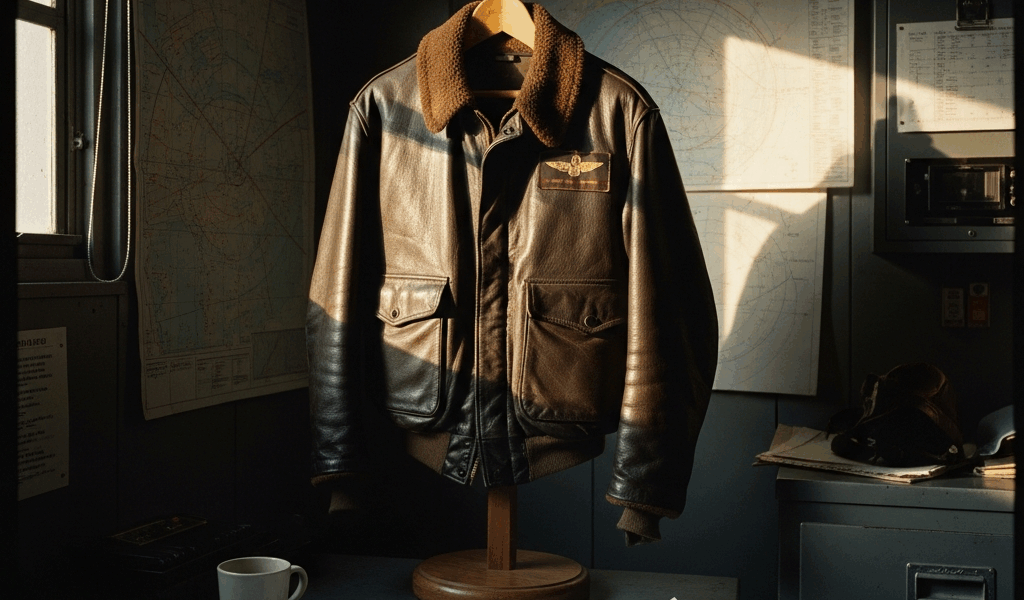
The Planes Were Close. The Pilots Were Not.
The F-86 Sabre vs MiG-15 debate has gotten complicated with all the spec-sheet noise flying around. Thrust-to-weight ratios. Service ceilings. Gun packages. I spent an embarrassing amount of time in that rabbit hole myself — forum arguments at 1 a.m., comparing climb rates like the numbers were going to hand me a verdict. They don’t. The hardware question is genuinely worth understanding, but it keeps burying the thing that actually decided who came home over MiG Alley.
Here’s the short version on the airframes: the MiG-15 was the better airplane above 35,000 feet. Faster climb. Heavier guns — a 37mm N-37 paired with two 23mm NR-23s that could dismantle a bomber in a single pass. The F-86 answered with hydraulically boosted controls that stayed crisp at transonic speeds while the MiG’s stiffened badly, a gyroscopic gun-ranging radar the MiG didn’t have at all, and a bubble canopy that gave American pilots a wide, mostly unobstructed view of everything behind and around them. Neither airplane was a clean winner on paper. That’s exactly what makes the pilot question the one worth asking.
So, without further ado, let’s dive in — because the answer is messier than the kill-ratio posters suggest.
Who Was Actually Flying Those MiGs
Most people walk into this topic assuming the MiG force was a roughly uniform bloc — Soviet-adjacent pilots of similar skill, flying for a common cause. That picture is wrong in almost every detail.
The MiG force operated in distinct tiers. North Korean pilots sat at the bottom — minimal flight hours, no combat experience, some barely qualified to solo. Chinese People’s Volunteer Air Force pilots occupied the middle. A handful carried piston-engine experience from the Civil War, but the transition to swept-wing jets through a compressed pipeline left serious gaps in formation discipline and instrument work. Inconsistent is the charitable word for it.
Then there were the Soviets. Flying under the cover designation of the 64th Fighter Aviation Corps — officially “volunteers,” officially wearing Chinese and North Korean markings — these were a different category entirely. Genuine World War II veterans. Men who had kills against the Luftwaffe recorded in actual logbooks. Yevgeny Pepelyayev finished the war credited with 19 aerial victories in Korea alone. Nikolai Sutyagin claimed 22 and shows up on some lists as the highest-scoring jet ace of the war, any nation. These were not amateurs.
But what crippled them regardless of individual skill was political. Soviet pilots were prohibited from flying south of a line roughly between Pyongyang and Wonsan — keeping them away from front lines and UN airbases. The Yellow Sea was off-limits, which eliminated certain pursuit corridors entirely. They flew false markings and could not be captured under any circumstances, which meant disengaging from fights that a less constrained pilot might have pressed hard. Pepelyayev said after the war that the geographic restrictions cost his unit real opportunities, daily. A gifted pilot operating inside those constraints is a hobbled pilot. That’s just math.
The Americans Who Flew Into MiG Alley
Probably should have opened with this section, honestly. The American pilot story is where the human-factors argument becomes clearest.
Joseph McConnell finished as the top American ace of the Korean War with 16 confirmed kills. James Jabara — first American jet ace in history — ended with 15. Manuel “Pete” Fernandez added 14.5. What stands out about all three, and about the top of the American leaderboard generally, is how many of those pilots had World War II hours behind them before they ever touched an F-86. Jabara had flown P-51s over Europe. That wasn’t incidental background. It was the difference.
WWII veterans arrived in Korea with specific technical muscle memory that the pure jet-age training pipeline hadn’t yet systematized. Deflection shooting — calculating angular velocity, leading a target rather than pointing at it — was something they’d drilled under fire against experienced Luftwaffe and Japanese opponents. Energy management, the discipline of converting altitude to speed and back again without bleeding into a low-and-slow state a MiG could exploit, was instinct for them. They also understood when not to fight. Breaking off a bad engagement isn’t hesitation — it’s how experienced combat pilots stay alive long enough to keep flying.
The USAF training pipeline at bases like Nellis in Nevada reinforced these habits structurally. Towed banner targets. Early air-to-air exercises. Quantifiable trigger discipline built before anyone crossed the Pacific. The pipeline wasn’t perfect — plenty of young American pilots arrived in Korea nervous and green — but it produced a floor of competence that the Chinese and North Korean programs demonstrably did not. Don’t underestimate what a floor does in a high-attrition air war.
Kill Ratios: Half the Story, Twice the Confidence
The 10:1 kill ratio. Read anything about Korea air combat and you’ve seen it. Ten MiGs destroyed for every F-86 lost. It appeared in official Air Force summaries. Got repeated until it calcified into received wisdom.
It’s wrong. Not directionally wrong — American pilots did outperform their opponents in aggregate — but numerically inflated in ways that badly distort the picture.
The overclaiming ran both ways. American pilots flying fast-moving jet engagements often couldn’t confirm kills in the chaos. A damaged MiG trailing smoke that limped back across the Yalu could be logged as a kill by whoever fired last. Institutional pressure during a politically ugly war didn’t help. Soviet and Chinese records — largely inaccessible until after 1991 — told a different story when researchers finally got to them.
Declassified Soviet archives and post-war research from historians including Xiaoming Zhang, alongside work compiled by the Air Force Historical Research Agency, revised the number significantly. The actual loss exchange ratio was likely somewhere between 2:1 and 3:1 in favor of the F-86. Still a real American advantage. Not a rout. Sutyagin’s 22 victories, cross-referenced against corroborating loss records, don’t all hold up cleanly either — both sides were occasionally counting the same damaged airplane twice. War does that to statistics.
The revised number matters because it changes the conclusion. A 10:1 ratio implies American hardware dominance. A 2:1 or 3:1 ratio — against an opponent flying under geographic restrictions, false markings, and hard disengagement rules — points somewhere more human. Training. Doctrine. Cockpit design. Mission flexibility. That’s a different argument, and it’s the right one.
Who Had the Edge — and Why It Still Matters
The direct answer: American pilots had the edge, and most of it came from institutional factors rather than raw individual talent.
The F-86’s bubble canopy reduced cognitive load in a measurable, practical way. Situational awareness in a dogfight is a finite resource. Every second an American pilot wasn’t craning his neck through a framed windscreen — the MiG-15’s canopy created genuine blind spots — was a second he could spend reading the fight instead of just surviving it. Small advantage. Compounds over hundreds of engagements.
The AN/APG-30 gun-ranging radar probably deserves more credit than it gets. Simple system by any modern standard — but it handed pilots a fire-solution cue that reduced the guesswork in deflection shots. I’m apparently the kind of person who finds 1950s radar specs genuinely interesting, and the APG-30 works for understanding why American gunnery results were more consistent while the MiG’s equivalent never materialized in the field.
Soviet aces like Pepelyayev were, individually, the equals of anyone flying that war. Flying false markings, forbidden from crossing certain lines on a map, required to disengage before a fight might turn — their skill couldn’t fully express itself. That’s not a knock on them. It’s an argument that institutional context shapes combat outcomes as decisively as individual ability does. Sometimes more.
What Korea taught both superpowers heading into the rest of the jet age was something neither wanted to admit plainly at the time: training pipelines and cockpit ergonomics were force multipliers as decisive as airframe performance. That lesson took decades to absorb. It explains why the next generation of air combat doctrine — on both sides of the Iron Curtain — invested heavily in realistic dissimilar air combat training rather than just chasing faster jets. The pilots mattered more than the planes. Korea proved it.


Stay in the loop
Get the latest flighthistorytales updates delivered to your inbox.