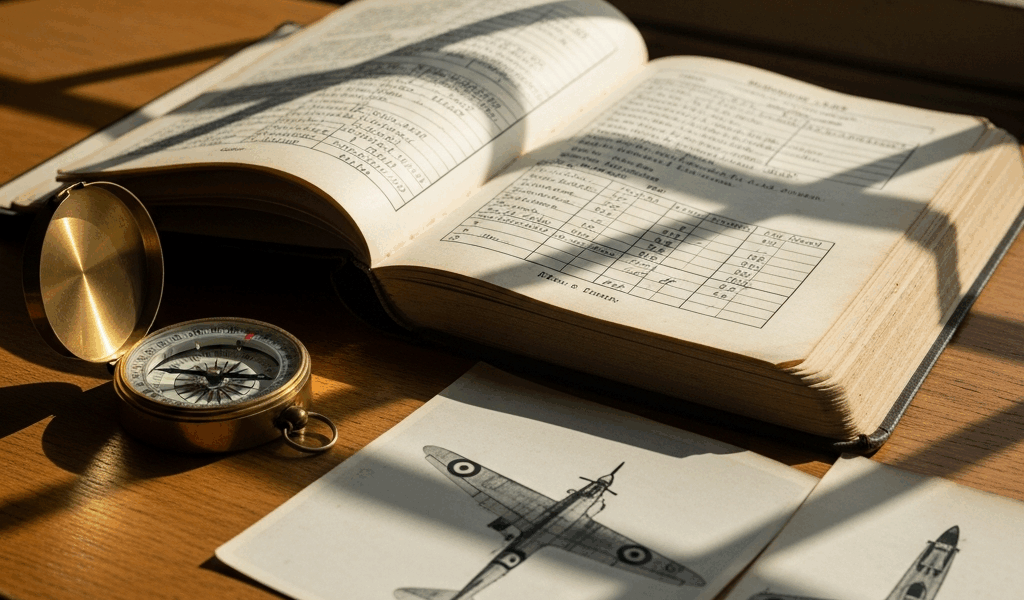
The Spitfire was generally the faster, higher-performance fighter; the Hurricane was the more numerous, simpler workhorse during the Battle of Britain. Asking which one “won” produces the wrong kind of answer. RAF Fighter Command needed both: Hurricanes formed the larger share of its fighter squadrons, while Spitfires could meet the Messerschmitt Bf 109E on more equal performance terms.
The Hurricane also destroyed more enemy aircraft during the Battle of Britain than any other single British fighter type, according to the RAF Museum. That does not prove it was the better aircraft per sortie—it reflects numbers, availability, missions, pilots, tactics, and opportunities as well as performance.
Hurricane vs Spitfire: the main differences
| Feature | Hawker Hurricane Mk I | Supermarine Spitfire Mk I |
|---|---|---|
| Battle of Britain role | The more numerous Fighter Command type; fought bombers and fighters as raids developed | Smaller but crucial force able to challenge the Bf 109E on closer terms |
| Construction | Steel-tube and traditional Hawker construction with fabric covering on much of the fuselage | All-metal stressed-skin monocoque structure |
| Wing | Thicker, straighter-tapered wing with rounded tips | Thin, distinctive elliptical wing |
| Typical Mk I armament | Eight .303-inch Browning machine guns | Eight .303-inch Browning machine guns |
| Engine | Rolls-Royce Merlin variants | Rolls-Royce Merlin variants |
| Performance character | Lower maximum speed, but stable, rugged, and effective | Faster and better suited to high-performance fighter combat |
| Visual clue | Boxier fuselage, thicker wing, more upright canopy profile | Slender fuselage and unmistakable elliptical planform |
Specifications changed across marks, propellers, engines, armor, radios, and field modifications. A single speed quoted without the exact variant, altitude, test condition, and date can be misleading. This comparison focuses on the Mk I aircraft central to the summer of 1940.
How to tell a Hurricane from a Spitfire
From above, the easiest clue is the wing. The early Spitfire has a graceful ellipse: both the leading and trailing edges curve toward the tip. The Hurricane has a more conventional tapered wing with a straighter trailing edge and rounded tip. From the side, the Hurricane looks deeper and more angular, with a pronounced “hump-backed” upper fuselage behind the cockpit. The Spitfire looks slimmer and smoother.
The landing gear is another clue in photographs. Both types used inward-retracting main undercarriages, but the Hurricane’s wheels sat farther apart. The Spitfire’s narrow-track gear retracted outward from attachment points near the fuselage, contributing to its distinctive stance on the ground.
Do not identify either aircraft from paint alone. Camouflage, national markings, spinners, canopies, and wing tips changed by unit, theater, date, and mark. Wing and fuselage geometry are more reliable.
Why the Spitfire had the performance advantage
R. J. Mitchell’s Spitfire combined a thin elliptical wing with stressed-skin construction and the Rolls-Royce Merlin. The airframe had less drag and greater development potential than the Hurricane’s older structural approach. The RAF Museum describes the Spitfire Mk I as the only British fighter then able to meet the Bf 109E on equal terms; that is the important operational comparison, not an unsourced claim that it dominated every altitude or maneuver.
Speed and climb helped a fighter choose when to engage, reposition against a raid, and disengage. They did not make the aircraft invulnerable. Visibility, warning, formation discipline, altitude at contact, pilot experience, fuel, gun serviceability, and tactical surprise could decide a fight before maximum performance mattered.
The Spitfire was also a better long-term development platform. Later marks received more powerful Merlin and Griffon engines, different wings and armament, and served in increasingly diverse roles. That later history should not be projected backward onto every Mk I encounter in 1940.
Why the Hurricane was indispensable
The Hurricane entered squadron service earlier and could be produced using skills and methods already familiar to Hawker and the aircraft industry. By the Battle of Britain, Fighter Command had far more Hurricane squadrons. The RAF Museum records that Hurricane squadron strength rose from 18 to 32 in the year before the battle; its Spitfire page says 19 Spitfire Mk I squadrons were available by July 1940.
That numerical advantage meant Hurricanes were present in more interceptions and had more chances to engage. The RAF Museum credits Hurricanes with destroying more enemy aircraft during the battle than all other air and ground defenses combined. This is often simplified into “the Hurricane won,” but total claims or credited victories are not a controlled test of airframe quality. More aircraft generate more sorties and more combat opportunities.
The Hurricane was nevertheless an effective fighter in its own right. It carried the same standard eight-gun battery as the early Spitfire, used the Merlin, and had enough performance to intercept bombers and fight escorts. Its construction could also be repaired by units familiar with steel tube, wood, and fabric, although it is too simplistic to claim every Hurricane was quicker to repair or safer in every crash.
Did Hurricanes attack bombers while Spitfires attacked fighters?
That is a useful shorthand, not an iron rule. Fighter Command controllers tried to place squadrons where they could disrupt raids. Spitfires were well suited to engaging Bf 109 escorts, leaving Hurricanes freer to attack bombers, but interception geometry, timing, altitude, and communications frequently mixed those roles. Hurricanes fought fighters; Spitfires attacked bombers.
The famous division should therefore be understood as a tactical preference when circumstances allowed, not a standing assignment followed in every engagement. RAF commanders controlled squadrons against a rapidly changing raid, not a tidy two-team contest.
Which turned better?
Popular comparisons often declare a universal winner using one turn-radius number. Aircraft turn performance changes with speed, altitude, loading, pilot technique, and whether the comparison is instantaneous or sustained. Combat accounts describe both types out-turning opponents under particular conditions, but that does not prove a fixed advantage everywhere in the envelope.
The defensible conclusion is narrower: the Hurricane had benign handling and was a capable turning fighter, while the Spitfire combined good maneuverability with higher speed and better overall fighter performance. Claims such as “the Hurricane always turned inside the Spitfire below 200 mph” require a specific test report and configuration, not repetition from an uncited comparison.
Armament and hitting power
Standard early Battle of Britain versions of both fighters carried eight rifle-caliber Browning machine guns. Fighter Command’s “Dowding system”—radar, Observer Corps reporting, filter rooms, sector control, communications, airfields, maintenance, and ground crews—put those guns in position. Comparing the airframes without that system misses why either aircraft could be effective.
Both designs later carried cannon and other weapons. Hurricanes became fighter-bombers, tank attackers, night fighters, reconnaissance aircraft, Sea Hurricanes, and tropical variants. Spitfires developed into interceptors, fighter-bombers, reconnaissance aircraft, and naval Seafires. Those later missions demonstrate different development paths rather than proving one 1940 fighter “won.”
Which shot down more aircraft?
The Hurricane received more credited victories during the Battle of Britain. Treat exact internet kill counts cautiously. Wartime claims were compiled under combat conditions; shared victories, damaged aircraft, duplicated claims, and later reconciliation with German records complicate a single precise total.
The safest high-level statement comes from the RAF Museum’s Hurricane Mk I history: Hurricanes destroyed more enemy aircraft in the battle than all other air and ground defenses combined. That achievement reflects the aircraft’s effectiveness and its greater numbers. The RAF Museum’s Spitfire Mk I history explains the Spitfire’s distinct value against the Bf 109E.
Which aircraft was easier to build?
The Hurricane’s structure grew from Hawker’s established design practice and could enter large-scale service sooner. The Spitfire’s stressed-skin fuselage and complex wing demanded different tooling and production organization. That helps explain why Hurricanes were the larger force during the battle even though total Spitfire-family production eventually exceeded Hurricane production.
For totals, factories, timing, and why final wartime output can distort the 1940 picture, see our separate Hurricane and Spitfire production comparison.
So, was the Hurricane better than the Spitfire?
As a pure fighter design, the Spitfire had the edge. It was faster, better able to contest the Bf 109E, and had more development potential. As an available fighting force in the Battle of Britain, the Hurricane was equally indispensable. It equipped more squadrons and received more credited victories.
Britain did not survive because one type defeated the other in a paper comparison. It survived because Fighter Command combined both aircraft with pilots from Britain and allied nations, radar and observation, sector control, ground crews, repair organizations, production, and leadership. Remove either fighter from that system in the summer of 1940 and the defense becomes substantially weaker.
Frequently asked questions
Did the Hurricane and Spitfire use the same engine?
Early examples of both used versions of the Rolls-Royce Merlin, but engine marks, boost settings, propellers, and installations changed. Sharing an engine family did not give the two airframes identical performance.
Was the Hurricane faster than the Spitfire?
No in comparable early fighter marks: the Spitfire generally had the higher maximum speed. Exact figures depend on mark, altitude, equipment, and test conditions.
Which fighter shot down more aircraft in the Battle of Britain?
The Hurricane received more credited victories, aided by its greater numbers. That total should not be treated as a per-sortie test proving the Hurricane was the superior airframe.
Why is the Spitfire more famous?
Its appearance, performance, long development history, continued wartime service, preservation, and symbolic status all contributed. The Hurricane’s central role is nevertheless well established by the RAF Museum and other historical institutions.

Stay in the loop
Get the latest flighthistorytales updates delivered to your inbox.