Sources: Lockheed Martin Skunk Works archives, CIA FOIA releases, National Air and Space Museum records
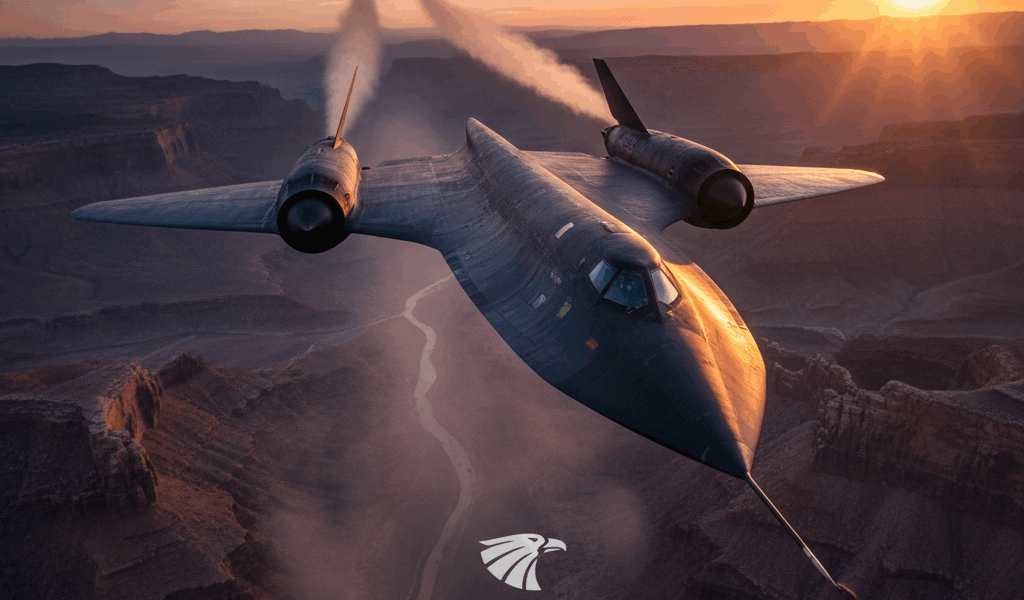
On July 28, 1976, SR-71A tail number 61-7958 set the official airspeed record: 2,193.167 mph (Mach 3.3). That record still stands today – no aircraft has flown faster in sustained level flight.
Development: The Skunk Works Miracle
Kelly Johnson’s team at Lockheed’s Skunk Works designed the SR-71 in secret starting in 1958. The challenges seemed impossible:
- No existing materials could withstand Mach 3+ heat (over 500 degrees F)
- Standard fuel would boil at operating temperature
- Hydraulic fluid would catch fire
- Tires would explode on takeoff
The solution: build 85% of the airframe from titanium – much of it secretly purchased from the Soviet Union through CIA front companies.
Operational History
The first SR-71 flew on December 22, 1964. Over its 34-year operational career:
- 32 aircraft built (12 lost to accidents, none to enemy action)
- Over 3,500 missions flown
- More than 1,000 SAMs fired at SR-71s – zero hits
- Typical mission altitude: 85,000 feet
When enemy radars lit up, pilots simply accelerated. No missile could catch them.
Speed Stories
Former pilot Brian Shul tells of flying over Libya in 1986: Libyan radar locked onto us. I pushed the throttles forward. Los Angeles Center came on: Aspen 20, you’re showing 2,200 knots groundspeed. I replied: Give or take.
On its final flight to the Smithsonian in 1990, SR-71 61-7972 flew coast to coast in 64 minutes and 20 seconds, averaging 2,124 mph.
Where to See Them
Surviving SR-71s are displayed at:
- National Air and Space Museum, Udvar-Hazy Center (61-7972)
- National Museum of the USAF, Dayton (61-7976)
- Pima Air Museum, Tucson (61-7975)
- Blackbird Airpark, Palmdale (61-7973)




Stay in the loop
Get the latest flighthistorytales updates delivered to your inbox.