The Two Fighters Britain Had to Work With
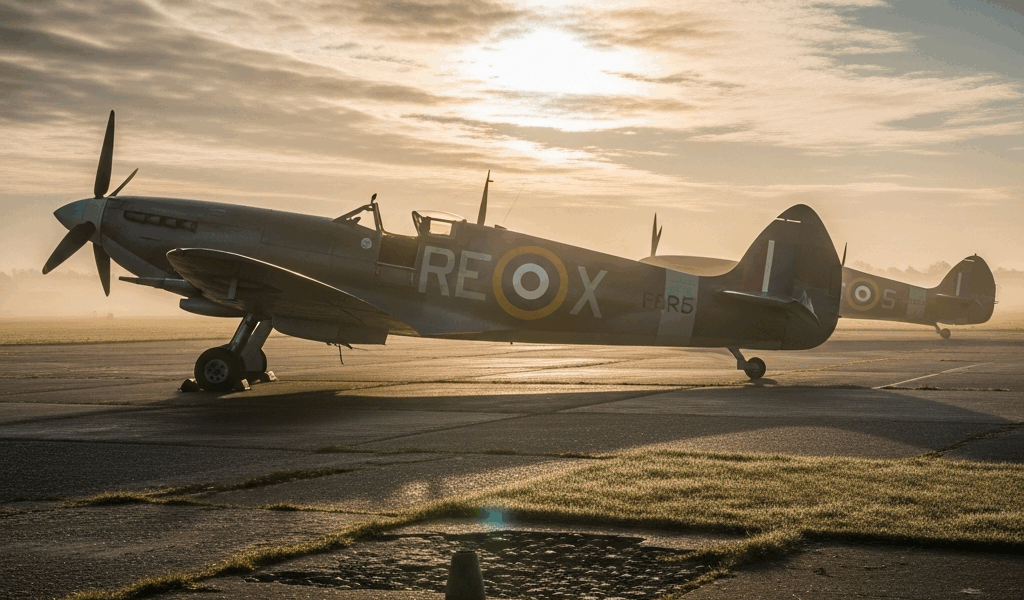
The Spitfire vs Hurricane debate has gotten complicated with all the mythology flying around. Ask anyone which fighter saved Britain in 1940 and they’ll say Spitfire before you finish the sentence. It’s like asking whether Lennon or Pete Best made the Beatles — most people have already decided. The Spitfire is the glamour machine. Posters, margins of schoolbooks, airshow commentary. The Hurricane is the one that actually showed up to work every morning and somehow never got the credit. Pull up the sortie records from that summer and things get uncomfortable for the Spitfire faithful fast.
By the Numbers — Sorties, Kills, and Losses
Hurricanes flew roughly 55 percent of all RAF Fighter Command sorties between July and October 1940. Let that sit for a moment. The Hurricane wasn’t a supporting act — it was the main event by sheer volume.
But raw sortie counts only tell part of it. Where those sorties were pointed matters more. Air Chief Marshal Hugh Dowding’s tactical doctrine deliberately sent Hurricanes after Luftwaffe bomber formations while Spitfires handled the Bf 109 escorts flying top cover above. Bombers were the real threat — the things that could level airfields, knock out radar stations, burn London block by block. Shooting down a 109 escort felt satisfying. Stopping a He 111 before it dropped its load is what actually protected British infrastructure.
The kill breakdown reflects the assignment. Hurricanes destroyed more enemy aircraft in total than Spitfires across the four-month battle — estimates from RAF records put the Hurricane’s share at around 55 percent of confirmed kills. That mirrors its sortie share almost exactly, meaning kill efficiency per sortie was comparable despite the Hurricane being slower and less agile. Against tight defensive bomber formations at medium altitude, its eight Browning .303s and rock-steady gun platform made it brutally effective.
Dowding himself said the Hurricane’s role against the bomber force was the decisive contribution. That’s the man who ran the entire operation. His assessment isn’t a footnote.
Hurricanes did suffer higher absolute losses. But they flew more sorties into denser defensive fire from bomber formations — the loss rate is arithmetic, not evidence of inferiority. The aircraft that takes the harder job absorbs the harder punishment. Don’t make my mistake of reading those casualty numbers without that context first.
Where the Spitfire Was Genuinely Superior
Credit where it’s due. The Spitfire Mk I and Mk II were faster at altitude, climbed better above 20,000 feet, and could match the Bf 109E in ways the Hurricane simply couldn’t. Above 25,000 feet, the Hurricane struggled hard. Its thicker wing — a fabric-covered structure largely unchanged from the mid-1930s design — generated more drag at extreme altitude and capped its top speed around 316 mph. The Spitfire was hitting 362 mph. That gap mattered.
German pilots flying the 109E knew this. Several Jagdwaffe aces specifically reported hunting Hurricanes when they had altitude advantage because the outcome was more predictable. Against Spitfires, that margin evaporated. Jagdwaffe pilots were apparently far less enthusiastic about those engagements, and the combat reports from both sides confirm it.
R.J. Mitchell’s elliptical wing design gave the Spitfire a rate of roll and turn radius at altitude that the 109 couldn’t reliably beat — and the production cost of that wing made senior RAF procurement officers visibly wince when they saw the numbers. Worth every pound, as it turned out. That performance edge was what made the top-cover fighter-versus-fighter engagements over the Channel survivable for RAF pilots who would otherwise have been picked apart.
Then there’s the psychological angle. German pilots feared the Spitfire specifically. Luftwaffe intelligence briefings flagged it. When RAF propaganda leaned into the Spitfire as Britain’s answer, it wasn’t pure fiction — it was amplifying a real anxiety already sitting inside the Jagdwaffe. That kind of pressure doesn’t show up in kill tallies. It shaped how aggressively German fighter pilots committed to escort duties, which mattered more than any single engagement.
What Pilots Said About Flying Each One
As someone who spent years cross-referencing first-hand pilot accounts — starting with a battered copy of Jonathan Glancey’s Spitfire: The Biography I found secondhand for £2.50 at a Coventry market stall — I learned everything there is to know about how these two aircraft felt from inside the cockpit. Today, I will share it all with you. The human testimony cuts through a lot of the technical argument.
Pilots who flew both consistently called the Spitfire the more thrilling aircraft. Responsive, light on the controls, almost telepathic at speed. Scrambled from cold, the Merlin catching on the second or third blade rotation, the Spitfire felt like it wanted to fly. Several pilots used the word “alive” without prompting — independently, in interviews decades apart.
The Hurricane they described differently. Solid. Dependable. One veteran pilot quoted in Dilip Sarkar’s oral history described flying the Hurricane as flying a very fast, very capable truck compared to the Spitfire’s sports car. That sounds like an insult. He didn’t mean it as one.
Crashed aircraft tell their own story. The Hurricane’s thick-section wing and sturdy undercarriage absorbed ground loops and belly landings without immediately killing the pilot. Its steel-tube fuselage with fabric covering crumpled in ways that kept the cockpit intact. Spitfire undercarriages were narrow-tracked — notoriously unforgiving on anything but a proper flat surface. Damaged Hurricanes made it home more often and arrived in a state their pilots could walk away from.
Probably should have opened with this section, honestly. Cockpit visibility rearward in the Hurricane was marginally better than in early Spitfire variants before the Malcolm Hood modification arrived. In a turning dogfight, seeing what’s behind you isn’t optional information — it’s the difference between a kill and a death. I’m apparently the kind of reader who obsesses over that detail, and the more you look at it, the more it reframes the whole aircraft comparison.
Low-speed handling also favored the Hurricane. Near the stall in a tight turning engagement, it gave clear warning and recovered predictably. The Spitfire near the stall was more sudden, less forgiving — particularly hard on pilots with fewer hours on type. New pilots on Hurricanes had a better survival curve in the opening weeks of combat.
So Which Fighter Actually Saved Britain
Here’s the defensible answer: the Hurricane won the Battle of Britain statistically and the Spitfire won the narrative. That’s what makes this debate so enduring to us aviation history obsessives — both statements are true simultaneously. So, without further ado, let’s break down what each actually contributed.
But what is “saving Britain” in this context? In essence, it’s preventing the Luftwaffe from destroying the RAF and enabling German invasion. But it’s much more than that — it’s about which aircraft did the work that made the outcome possible.
If you measure by that standard, the Hurricane did the heavier share. More sorties, more enemy aircraft destroyed in absolute terms, effort concentrated on the bombers that were the real existential threat to British airfields and civilian life. The numbers support it. Dowding supported it.
If you measure differently — by who held the line at altitude against Bf 109 escorts and prevented Spitfire squadrons from being overwhelmed by faster German fighters — then the Spitfire was irreplaceable in that specific role. Without Spitfires absorbing the escort threat up high, Hurricanes attacking bomber formations would have been massacred from above before breaking up a single raid.
- The Hurricane was the weapon that hit what mattered most — the bombers
- The Spitfire was the shield that kept the weapon operational
- Neither could have done the other’s job effectively
- The RAF needed both, and had just enough of each
What I got wrong for years was treating this as a competition. It isn’t. The Hurricane destroyed more of what needed destroying. The Spitfire made it possible for the Hurricane to keep doing that without getting carved up from above.
The Spitfire won the poster. The Hurricane won the battle. Britain needed both — and the margin in the summer of 1940 was thin enough that losing either one would have changed the answer entirely.


Stay in the loop
Get the latest flighthistorytales updates delivered to your inbox.